
IMT–UNGCNI Round Table | Charting the Sustainability Transition | March 13, 2026
Round Table 2026
Charting the Sustainability Transition
Strategic Dialogue on India’s Net Zero Journey
India’s sustainability journey is at a pivotal inflection point. As regulatory expectations deepen and market pressures intensify, organisations are increasingly focused on charting the sustainability transition across strategy, operations, and governance.
The IMT Ghaziabad–UNGCNI Round Table, held on March 13, 2026, brought together leaders from industry, practice, and academia for a high-level dialogue anchored in the release of the IMT–UNGCNI Sustainability Capability Study.
Key Panel Insights

Structured ESG Adoption
Firms are moving beyond standalone initiatives toward more integrated ESG practices.

Capability Gap
Leadership intent is visible, but execution remains uneven across organisations.

Digital Enablement
Data, analytics, and reporting are becoming central to credible sustainability performance.

Strategic Imperative
The next phase depends on systems, governance, and managerial capability at scale.
Distinguished Panel
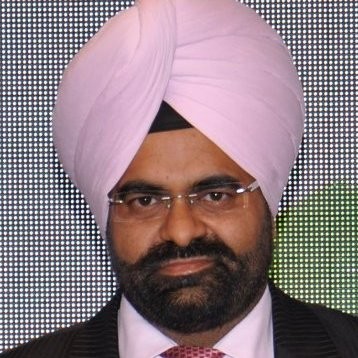
Ranjit Singh
Executive Vice President
Maruti Suzuki India Limited
Manufacturing and sustainability integration

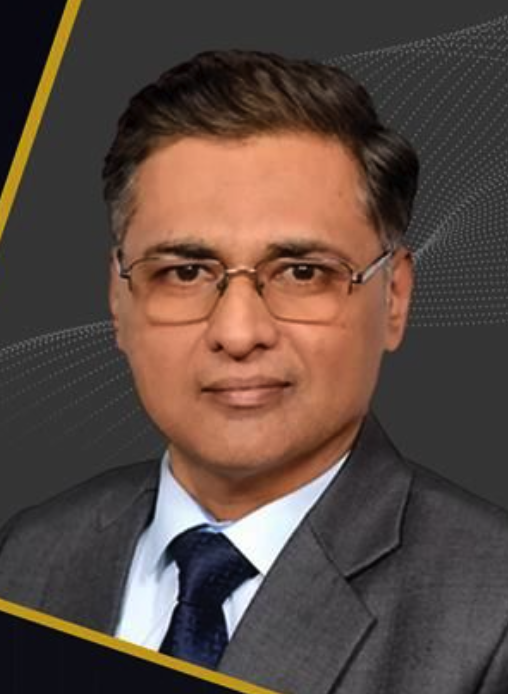
Sandeep Shrivastava
Former Chief Sustainability Officer
Indorama Corporation
Global sustainability strategy and execution

Subhashis Dey
Co-founder
Solutions for Sustainable Living (SoSul)
Sustainability innovation and ecosystem solutions
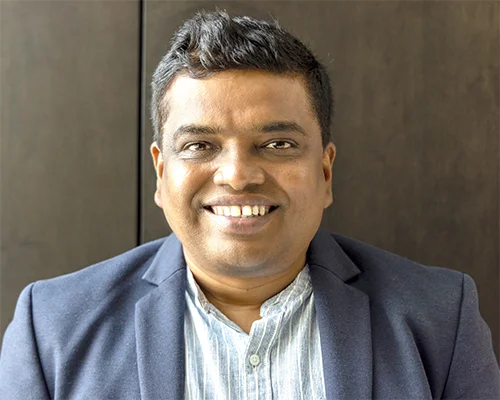
Abhishek Ranjan
Senior Director and Global Head ESG | Managing Trustee, Brillio Foundation
Brillio
ESG governance, digital integration, and scale
Media Coverage
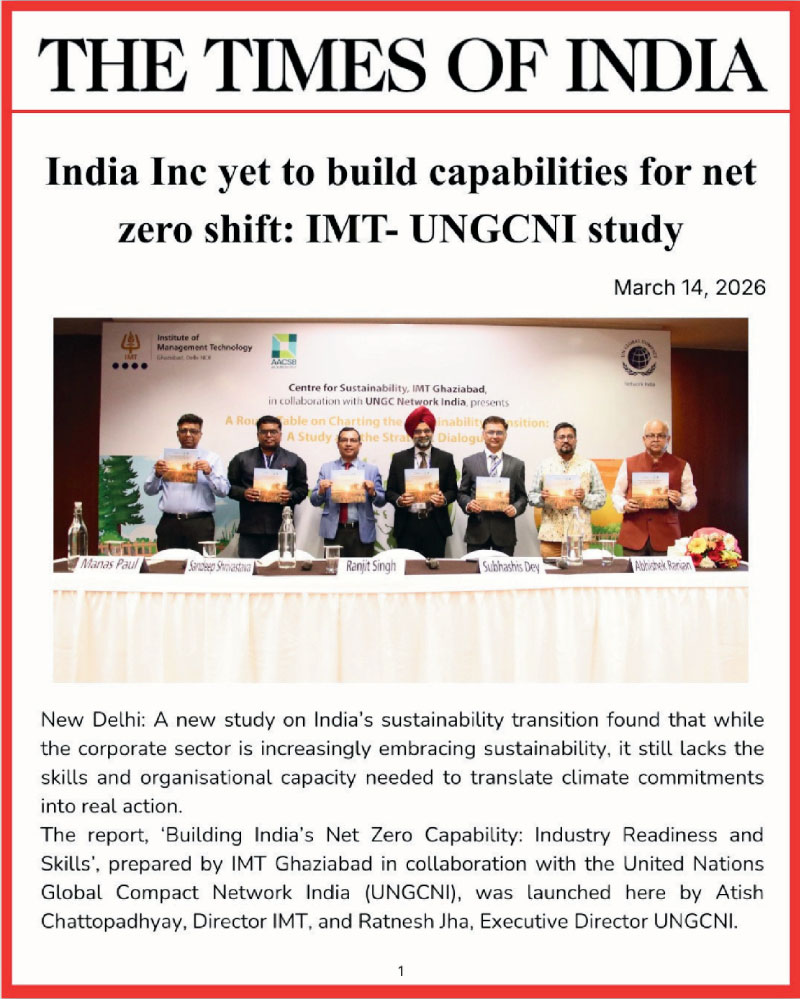
A new study on India’s sustainability transition found that while the corporate sector is increasingly embracing sustainability, it still lacks the skills and organisational capacity needed to translate climate commitments into real action.
The report, ‘Building India’s Net Zero Capability: Industry Readiness and Skills’, prepared by IMT Ghaziabad in collaboration with the United Nations Global Compact Network India (UNGCNI), was launched here by Atish Chattopadhyay, Director IMT, and Ratnesh Jha, Executive Director UNGCNI, on Friday.
The first-of-its-kind study examines how ready Indian businesses are to meet sustainability and net-zero goals, which further transcends to Sustainable Development Goals.
“The modern industrial system, built on coal, oil and gas, powered growth and improved living standards for over a century. But it now presents a major challenge: how can we continue to grow and prosper without damaging the planet’s ecosystems that sustain life,” said Atish Chattopadhyay in the context of India as a major energy importer.
Based on a survey of 113 organisations across sectors such as manufacturing, finance, technology, logistics and retail, the study found a widening gap between intent and execution capabilities.
India aims to achieve net zero emissions by 2070. The study flagged major capacity gaps to ascertain what motivates firms to adapt, embed sustainability practices, and build capability to move from compliance to execution.
The sustainability transition is no longer about recognising the challenge.
## It is about how effectively we chart it—through capability, clarity, and scale.
Copyright © 2026 IMT